
What Is Radiofrequency Microneedling?
The short answer
It's microneedling with heat added at the bottom of the needle.
That's the whole innovation, and it's a bigger deal than it sounds. Standard microneedling makes small punctures and lets your skin respond to the injury. Radiofrequency microneedling makes the same punctures with insulated needles that deliver energy from their tips once they're at depth, heating the tissue underneath while leaving the surface comparatively alone.
Heat at depth does two things collagen responds to. It causes immediate contraction of existing collagen fibres, which gives a modest tightening you can sometimes see early, and it triggers a stronger remodelling response than needling alone, which is where the longer-term change comes from.
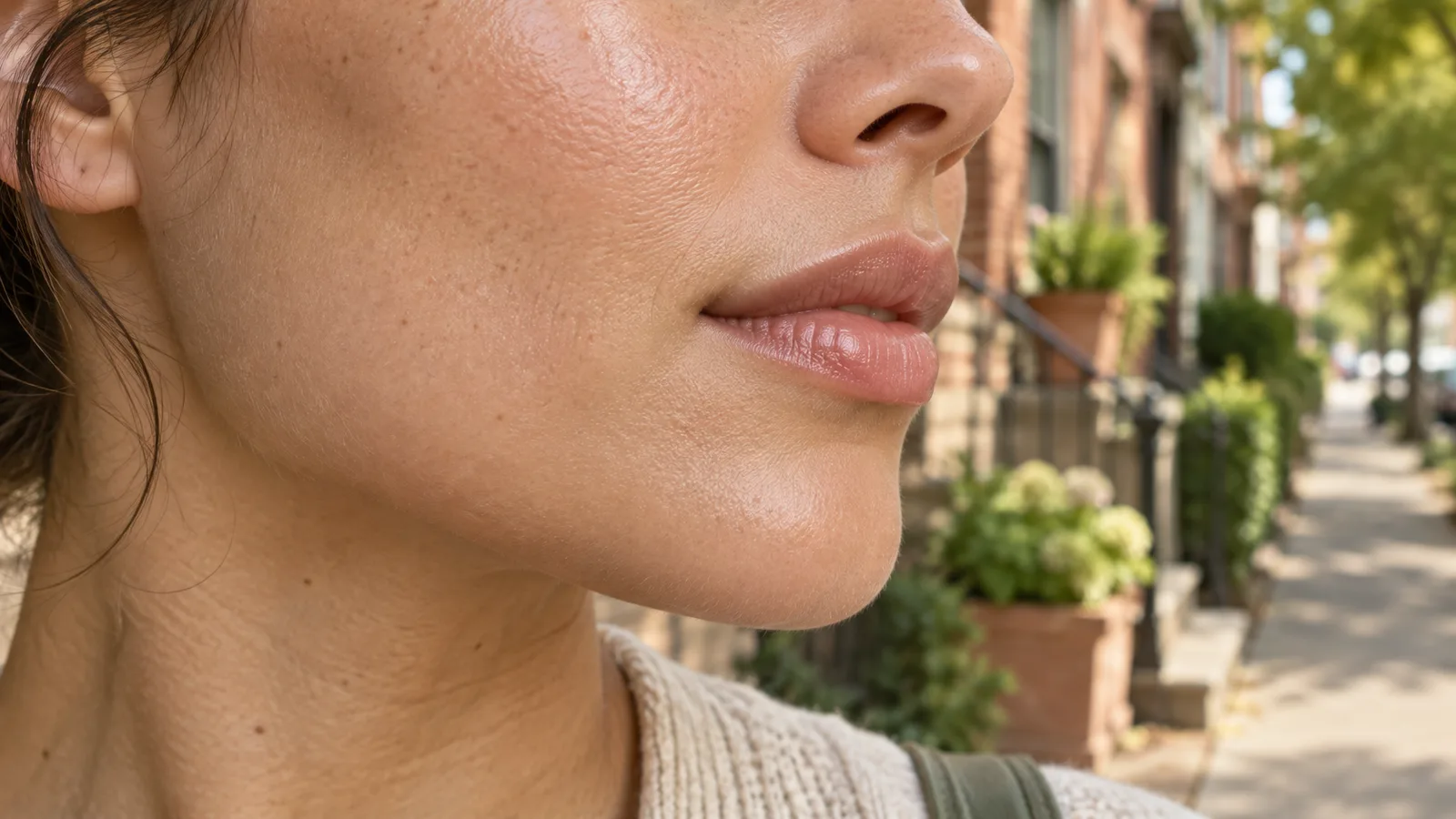

Why the insulation matters
The needles are coated along their length so that energy is released only at the tip. That's what allows the treatment to heat the dermis while sparing the top layer of skin.
That matters a great deal if your skin is anything other than very fair. Surface heating is what provokes pigment trouble in richer skin tones, and putting the energy underneath the surface lowers that exposure. It's the main reason this treatment comes up for skin that wouldn't tolerate laser resurfacing.
The risk isn't gone for richer tones, and how often the practitioner has treated skin like yours still counts for more than the machine.
What it's good at, and what it isn't
It's good at texture, at mild to moderate laxity, at acne scarring, and at the general firmness of skin that has started to slacken. It's the most credible non-surgical option for early jawline softening, with the emphasis on early.
It is not a facelift. It does not replace volume. It doesn't do anything about muscle movement, so the lines that come from frowning stay where they are. And on skin that has slackened substantially, it produces a disappointment rather than a result.
Against standard microneedling: more change per session, fewer sessions needed, more cost, more discomfort, more downtime. Against laser resurfacing: less dramatic surface improvement, less recovery, generally safer across skin tones.
What the appointment and the week look like
Numbing cream for a good half hour beforehand, because this is genuinely uncomfortable without it.
The treatment itself runs twenty to forty-five minutes depending on the area, with the depth and energy adjusted as the practitioner moves across the face.
Afterwards you'll be red, warm, and often noticeably swollen for a day or two — more swelling than standard needling, which catches people out. A fine grid pattern is sometimes visible for a couple of days where the needle tips sat.
Days three to five, you're back to something you'd leave the house in, possibly with some dryness and flaking.
The actual result builds over two to three months, and a course is usually three sessions spaced four to six weeks apart.
Planning it properly
Don't book it in the fortnight before anything you can't move. The swelling is unpredictable in a way the redness isn't.
Take the sun seriously for the whole course, not just the week after each session. Skin that's actively remodelling pigments easily, and up here the walk along the waterfront delivers more exposure than people account for. Checking National Weather Service before a session in high summer is a reasonable habit, both for the heat and for what you'll be able to stand doing afterwards.
Keep the schedule realistic. If your weeks are built around a class or a league, the township's activity calendar at Recreation | WEEHAWKEN TOWNSHIP is worth a glance before you commit to three appointments six weeks apart, because the course is where people drop out.
Ask what depth and what energy setting they've chosen for each area, and why. A practitioner who adjusts across the face — shallower near the eyes, deeper on the cheeks — is doing the job properly. One setting everywhere is a shortcut.
Ask how many they perform monthly, and specifically how many on skin like yours.
Who it isn't for
Anyone with an active skin infection or a breakout in the area, until that's settled.
Anyone with an implanted electrical device, because of the energy involved. Say so at the consultation rather than assuming it will be asked about.
Anyone who's had isotretinoin recently, where most practitioners want a gap of several months.
Anyone pregnant or breastfeeding, by convention rather than by established harm.
Anyone with a history of keloid scarring, which needs a proper conversation first.
And anyone hoping this will substitute for surgery. That's not a contraindication so much as a mismatch, but it's the most common reason people come away disappointed, and a practitioner who says so plainly is doing you a favour.
The honest framing
This is one of the more effective treatments available without a scalpel, and it's also one of the most aggressively marketed, usually under a brand name that makes it sound like a distinct invention rather than a category.
Compare on depth range, energy delivery and the practitioner's experience. Don't compare on brand.
And expect improvement rather than transformation. The people who are happiest with this treatment are the ones who came in with early laxity and some textural complaint, did the full course, and judged the result three months after the last session. The people who are disappointed wanted something surgical without surgery, and no device on the market does that.