
How Do I Reduce Bruising After Filler?
The short answer
Most of the work happens before the appointment, not after it. By the time you're bruised, your options are cold, patience and concealer.
So the useful version of this page is a timeline: the week before, the day of, and the days after.

The week before
Stop the things that thin your blood, if you're allowed to. Ibuprofen, aspirin taken for pain rather than prescribed, fish oil, high-dose vitamin E, ginkgo, ginseng, garlic supplements and turmeric supplements all make bruising more likely. A week is the usual advice, five days at minimum.
The large caveat: if a doctor has prescribed a blood thinner or daily aspirin for your heart, you do not stop it for a cosmetic appointment. Tell your injector instead and accept that you'll bruise more. Nobody's face is worth a clot.
Ease off the alcohol for a couple of days. It dilates vessels and thins the blood somewhat. Two or three days is plenty.
Consider arnica, which some practitioners recommend starting a few days beforehand. The evidence is mixed at best, it's inexpensive, and it's unlikely to do harm. I'd file it under "probably marginal, easy to try."
Don't book it in the fortnight before something that matters. This is the advice that actually works and the one people ignore. A filler bruise can persist for a week or more, particularly around the mouth and under the eyes.
The day itself
Turn up hydrated and fed. Fainting is more common than bruising as a same-day drama, and it's mostly preventable.
Skip the workout beforehand. Raised heart rate and warm, dilated vessels make a bruise more likely.
Ask about a cannula. For some areas, many injectors prefer a blunt-tipped cannula over a needle, which moves tissue aside rather than piercing through it and tends to produce fewer bruises. It isn't right for every placement, and technique matters more than the instrument, but it's a reasonable question.
Ask about ice before and during. Most practices do this as standard.
The first forty-eight hours
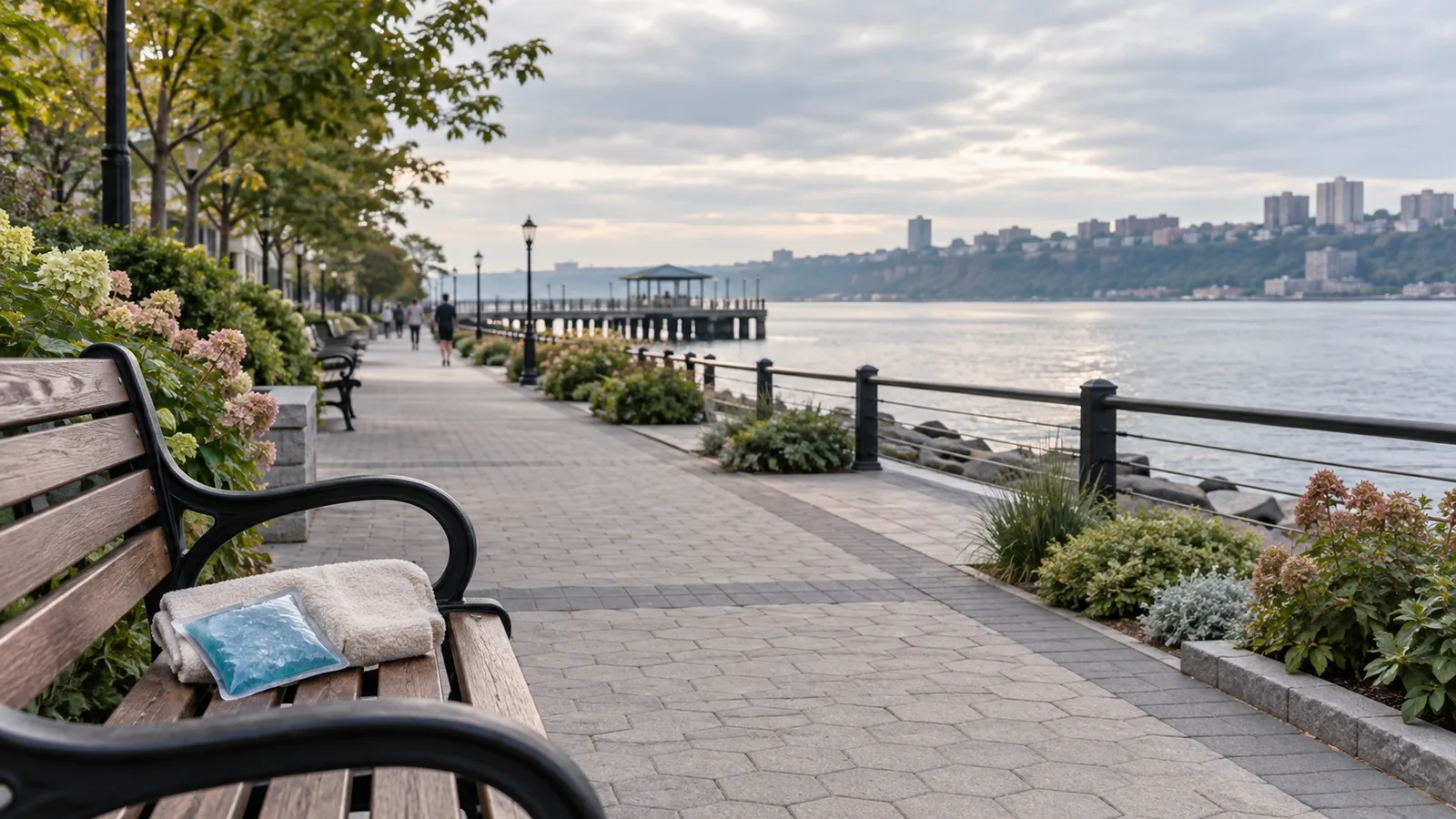
Cold, early. A cold pack, wrapped, for ten minutes at a time, several times over the first day or two. Cold constricts vessels and limits how much blood escapes into the tissue. Gentle pressure only — this isn't the moment to press hard on fresh filler.
Stay upright. No lying flat for a good four hours, and sleep with your head raised on an extra pillow for the first two nights. Gravity is working for you.
No exercise for twenty-four to forty-eight hours. Nothing that raises your heart rate substantially.
No heat. Skip the sauna, the steam room, the very hot shower and the long soak. Heat does the opposite of what you want in the first couple of days.
Leave it alone. No massaging unless you were specifically told to, and no makeup for the first day over injection points.
After the first two days
Switch from cold to warm. Once the bleeding has stopped, gentle warmth helps the body clear what's already there. A warm compress a couple of times a day from day three onward.
Arnica gel or vitamin K cream topically, with the same honest caveat about evidence.
Concealer with a yellow or peach base neutralises the blue-purple stage better than a straightforward skin-tone product does.
And then wait. A bruise goes through its colour sequence on its own schedule: dark red or purple, then green, then yellow, then gone. Five to ten days is the usual range, sometimes longer under the eyes where the skin is thin and everything shows.
What isn't an ordinary bruise
A bruise that appeared with sudden, severe pain at the moment of injection, or skin that looks blanched and white, or a mottled lacy pattern spreading beyond the injection site — these are not bruising and they need the same-day attention of whoever treated you. The page on vascular occlusion covers what's happening and why the clock matters.
Ordinary bruising is dull, localised, and improving after day two. Anything worsening after day two deserves a phone call.
Planning it around here
The honest local advice is to book the treatment at the start of a stretch you control. A visible bruise is far easier on a week spent at home than on one spent on a crowded bus in August.
Look at your next two weeks before you commit to a date. Between them, Weehawken Patch – What you need to know today: Free Newsletter, Local News, Events & Calendar and Weehawken Daily Voice | Your Local News for Weehawken, New Jersey cover nearly everything going on locally, and people are remarkably good at forgetting what they've already said yes to.
If you're choosing where to go, the follow-up visit should decide it. Ethos Aesthetics + Wellness is physician-led and just across the water. The reason to mention a Hoboken address at all is that the trip from the ridge is short enough to make a two-week review realistic. That review is where a bruise gets looked at properly and where an uneven result gets adjusted.
Most of what you'll be weighing up are owner-run operations, a fair share of them turning up in the membership lists at Home - Hudson County Chamber of Commerce. Useful for longevity. Silent on how gently someone injects.
The one thing I'd hold onto
You can improve your odds. You can't eliminate the risk, and no practitioner honestly can either. Anyone promising you won't bruise is telling you something they can't know. Plan the calendar as though you will, and be pleasantly surprised.