
How Often Should I Get a Facial?
The short answer
Every four to six weeks is the standard answer, and it's worth knowing that the number comes from two places at once: a rough skin-cell turnover cycle, and a membership pricing model. Both are real. Only one of them is about your face.
A more useful answer starts with what you want the facial to do.
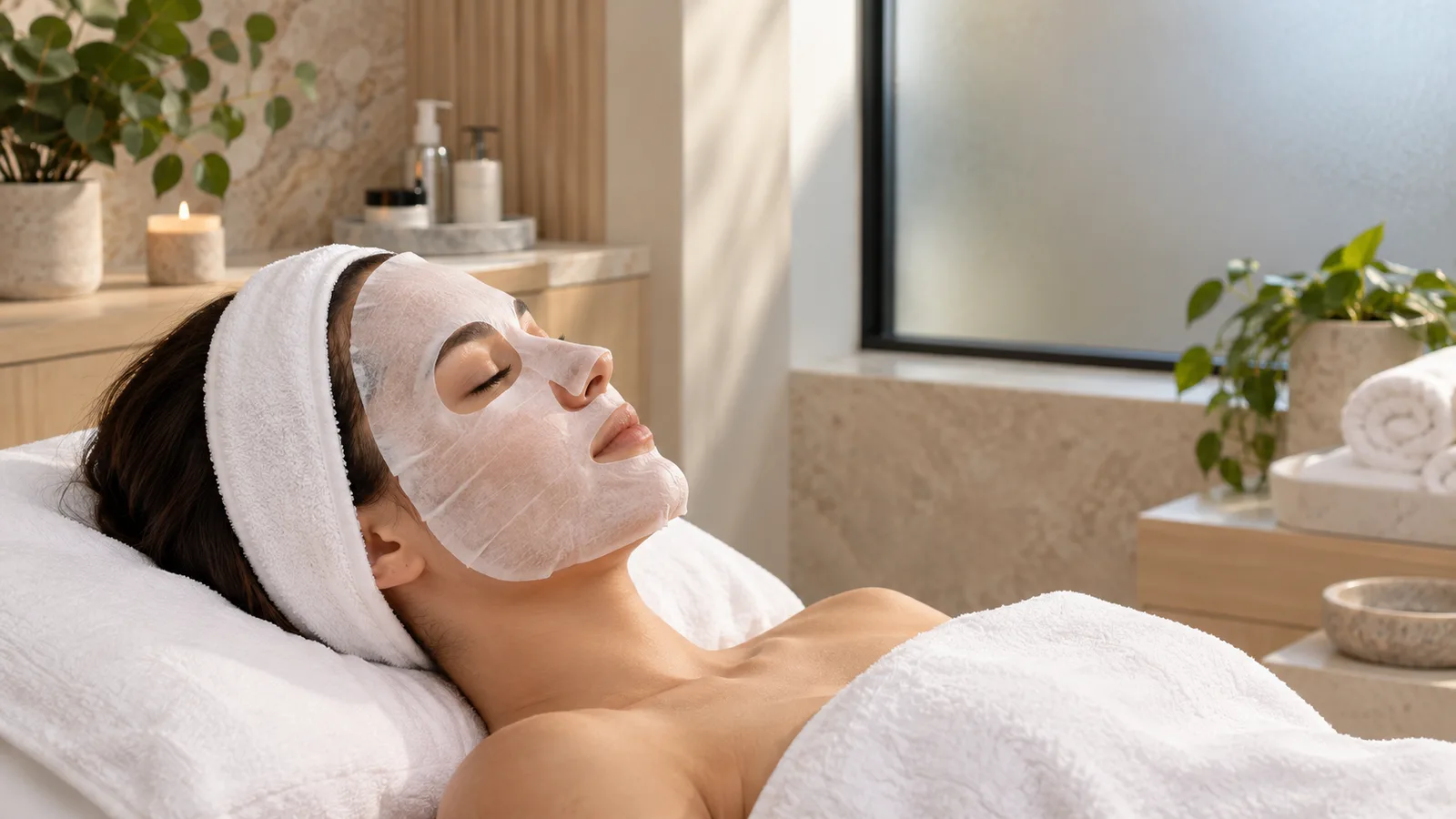
Three different reasons to book one
Maintenance and congestion. If you get blocked pores, blackheads or mild breakouts, regular extractions by someone competent genuinely help, and the four-to-six week rhythm makes sense. Your skin refills the pores on roughly that schedule.
Active treatment. If you're working on texture, pigment or acne with a course of peels or needling, the spacing is set by the treatment protocol, not by a general rule. Often four to six weeks, sometimes longer.
Relaxation and glow before something. Perfectly legitimate, and the frequency is whatever you like and can afford. Book it five to seven days before the event, not the day before.
If none of those describe you, the honest answer may be that you don't need a regular schedule at all. Skin that's behaving well on a decent home routine does not require monthly professional attention, whatever the membership form implies.
What a facial does and doesn't do
Does: clean thoroughly, remove surface build-up, extract what's blocking pores, hydrate, and give you an hour of someone paying careful attention to your skin — which occasionally catches something worth looking at.
Doesn't: build collagen in any lasting way, change pore size, remove wrinkles, or substitute for a retinoid and sunscreen. A facial is upkeep. The treatments elsewhere on this site are interventions. Confusing the two is how people spend consistently on the gentlest option and wonder why nothing changes.
Frequency by skin type, roughly
Oily or congestion-prone: every four to six weeks is genuinely useful.
Dry or mature: every six to eight is plenty, and gentler treatments suit better.
Sensitive or reactive: less often, every eight to twelve, and with a practitioner who'll do less rather than more.
Acne under active treatment: guided by whoever is managing it, and some prescription treatments make professional extraction and exfoliation unwise.
Nothing much wrong: seasonally, or when you feel like it.
Signs you're going too often
Skin that's more reactive than it used to be. Persistent redness. A barrier that stings when you apply things that never used to sting. Breakouts that started after you began a monthly schedule rather than before.
Over-treatment is real and it's easy to fall into when the treatment is pleasant and the schedule is prepaid. If your skin is worse than it was six months ago and the only change is frequency, that's your answer.
What to ask before signing up to anything monthly
What exactly is in the treatment, and does it change based on how my skin is that day?
What do you expect this to achieve over six months?
Can I pause or reschedule, and what happens to unused sessions?
Is this the best use of my money, or would a course of something else do more?
That last one is rude and it's revealing. Practitioners who answer it honestly are the ones worth going back to, and a fair number will tell you that a peel course or a retinoid would do more for your particular complaint than a year of monthly facials.
Where it fits in a sensible plan
Home routine first, always. Sunscreen daily, a retinoid most nights if your skin tolerates one, a gentle cleanser. That does more than any professional schedule.
Then targeted treatment for whatever specific concern you have, as a course, judged properly.
Then facials as maintenance around those, at whatever interval suits your skin and your budget.
If you're choosing a practice, choose one that offers the middle tier as well as the facials, because the person who can tell you when a facial isn't the right answer is generally the person to stay with. Ethos Aesthetics + Wellness Hoboken is one example across the water: the practice is headed by a physician, and does PRP facials and peels as well as microneedling, fillers and Botox-type injections. The reason to note the mix is that a practice carrying the full range has less incentive to sell you the gentlest thing on it indefinitely.
Most of these are small independent businesses. Several are established members of local groups like Home - Hudson County Chamber of Commerce or the state body (Home), which is worth a glance for longevity and nothing more. For the ordinary practicalities of getting there and parking, the township site at WEEHAWKEN TOWNSHIP | Home is the reference.
Short answer
Four to six weeks if you're congestion-prone. Six to eight if you're not. As dictated by the protocol if you're mid-course on something. And possibly never on a schedule at all, if your skin is fine and your routine is sound — which is not an answer you'll be offered at the desk, so it's worth arriving with it.