
What Is Microneedling With PRP?
The short answer
Standard microneedling, with a concentrate made from your own blood applied to the skin immediately afterwards while the channels are still open.
The idea is that the needling creates both the stimulus and the delivery route, and the platelet concentrate adds growth factors that push the repair response further than needling alone would.
That's the theory. It's plausible, it has supporting evidence, and the evidence is more modest than the marketing.
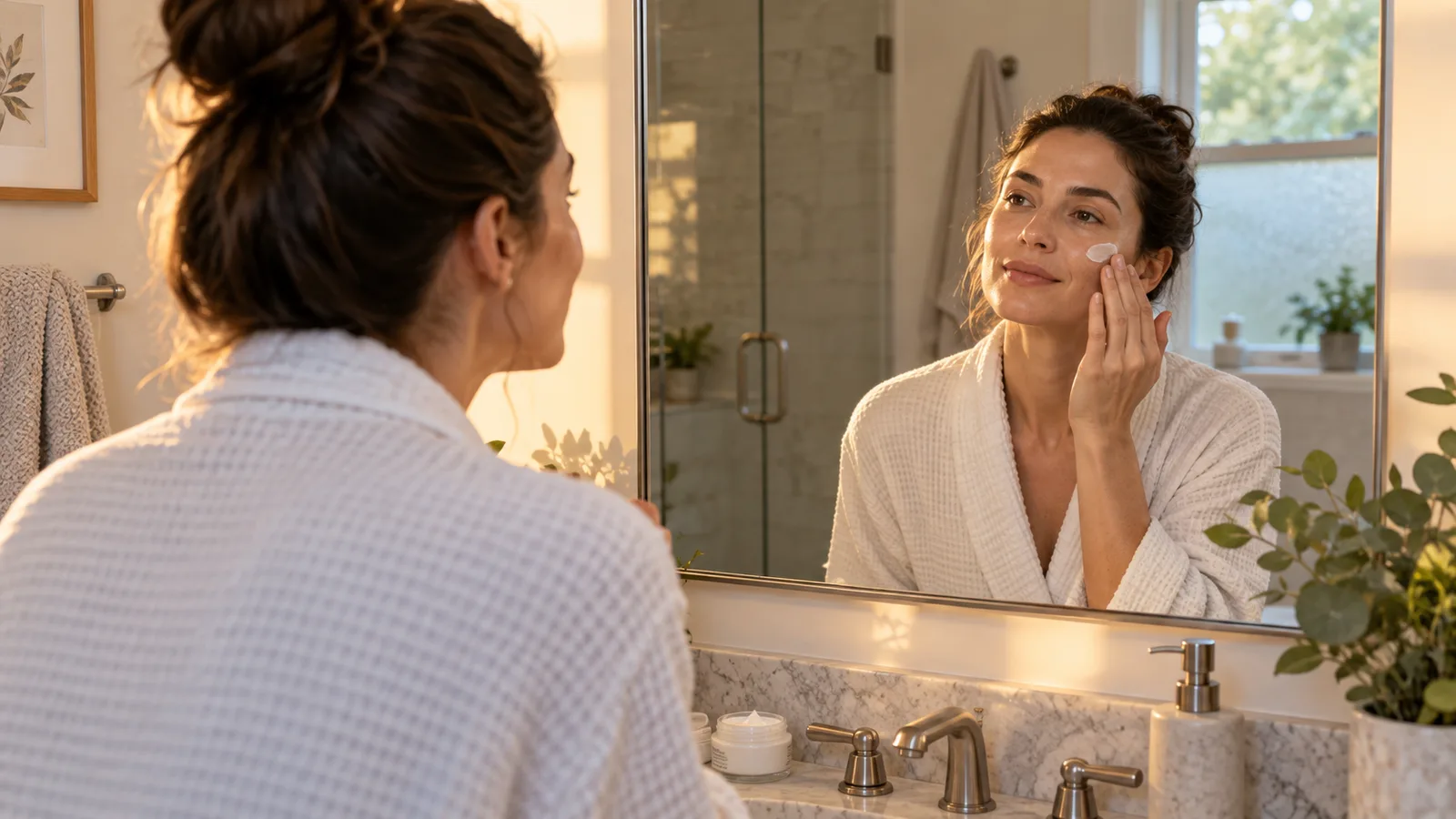

What happens at the appointment
Blood is drawn from your arm, usually a small tube or two.
It goes into a centrifuge, which separates it by density. The platelet-rich fraction is drawn off. Platelets are the cells that arrive first at an injury and release signalling chemicals that start repair.
Numbing cream goes on for twenty to thirty minutes.
The microneedling is performed as it normally would be, at a depth chosen for your skin and your concern.
The platelet concentrate is then applied to the treated skin, and sometimes injected into specific areas as well. The channels made by the needling remain open for a period afterwards, which is the delivery argument.
Total appointment time is usually an hour and a half or so, most of it numbing and spinning.
What the growth factors are supposed to do
Platelets release a set of signalling proteins that recruit repair cells, encourage new blood vessel formation and stimulate collagen production. That's what they do in an ordinary wound, and it's well understood.
Applying a concentration of them to skin that's just been deliberately injured is an attempt to amplify a process that's already underway.
What the evidence supports
Reasonably well: added benefit for acne scarring when combined with microneedling, compared with microneedling alone. This is where the literature is strongest.
Moderately: improvement in texture and tone, with studies generally showing a benefit and the size of it varying.
Less well: dramatic claims about tightening, or about being a different order of treatment entirely.
Separately and more strongly: hair thinning, where PRP has better evidence than it does for facial skin, though that's a different treatment with a different protocol.
The honest summary is that PRP appears to add something to microneedling, that the addition is incremental rather than transformative, and that the studies are often small with variable methods. The concentration achieved differs between systems, which is one reason results vary between practices.
Recovery, which is the needling's recovery
Day one: red, warm, tight, like a strong sunburn.
Day two: still pink, often the most swollen on waking.
Day three: much improved, makeup usually permitted.
Days four to six: many people get some dryness and a bit of flaking.
Day seven onwards: normal.
You're often asked to leave the PRP on the skin for several hours afterwards, which means going home with your face untouched and washing it later than you would otherwise.
The result builds over two to three months. A course is typically three sessions a month apart.
"It's your own blood" — what that does and doesn't mean
It does mean there's no risk of reacting to a foreign substance, which is a genuine advantage.
It doesn't mean the treatment is more effective, and that's how the phrase tends to get used. Autologous material is safer, not stronger.
It also doesn't mean quality is consistent. The concentration of platelets you get depends on your own blood that day, the system used, and how it's processed. Two appointments at two practices are not the same treatment.
Questions worth asking
Which system do you use, and what concentration does it achieve?
How much blood is drawn?
Is the PRP applied topically, injected, or both?
What depth of needling, and how many sessions do you recommend?
What's the price difference against plain microneedling, and what would you expect that difference to buy me?
The last question is the important one. A small premium on a session you'd booked regardless is easy to justify. A steep one usually isn't, and the money does more completing the base course.
Fitting it in
Three sessions a month apart is a three-month project, and convenience is what determines whether it gets finished.
Look at what those months already contain before you start. Local listings at Weehawken Daily Voice | Your Local News for Weehawken, New Jersey carry the town events people forget they've agreed to, and a course begun in a stretch you're not actually around for is a course abandoned.
If you're travelling between the ridge and Hoboken for it, the township's site at WEEHAWKEN TOWNSHIP | Home covers the practical side of getting about. The places themselves are mostly owner-run, and plenty turn up in the membership lists at Home - Hudson County Chamber of Commerce or with the state body (Home). Useful for longevity, silent on skill.
And treat sun avoidance as part of the treatment for the full course, not just the days after each session.
The short version
Microneedling with an amplifier attached. Good evidence for acne scarring, decent evidence for texture, no evidence for the transformation language. Worth adding if the premium is small. Not worth adding at the cost of finishing the course.